Santorini’s Sweet Wines: Sun, Volcanic Soil and a Forgotten Red
Santorini is famous for crisp Assyrtiko, but its sweetest wines tell an older story — of grapes dried under the Aegean sun, decades in barrel, and a nearly forgotten red called Mezzo.
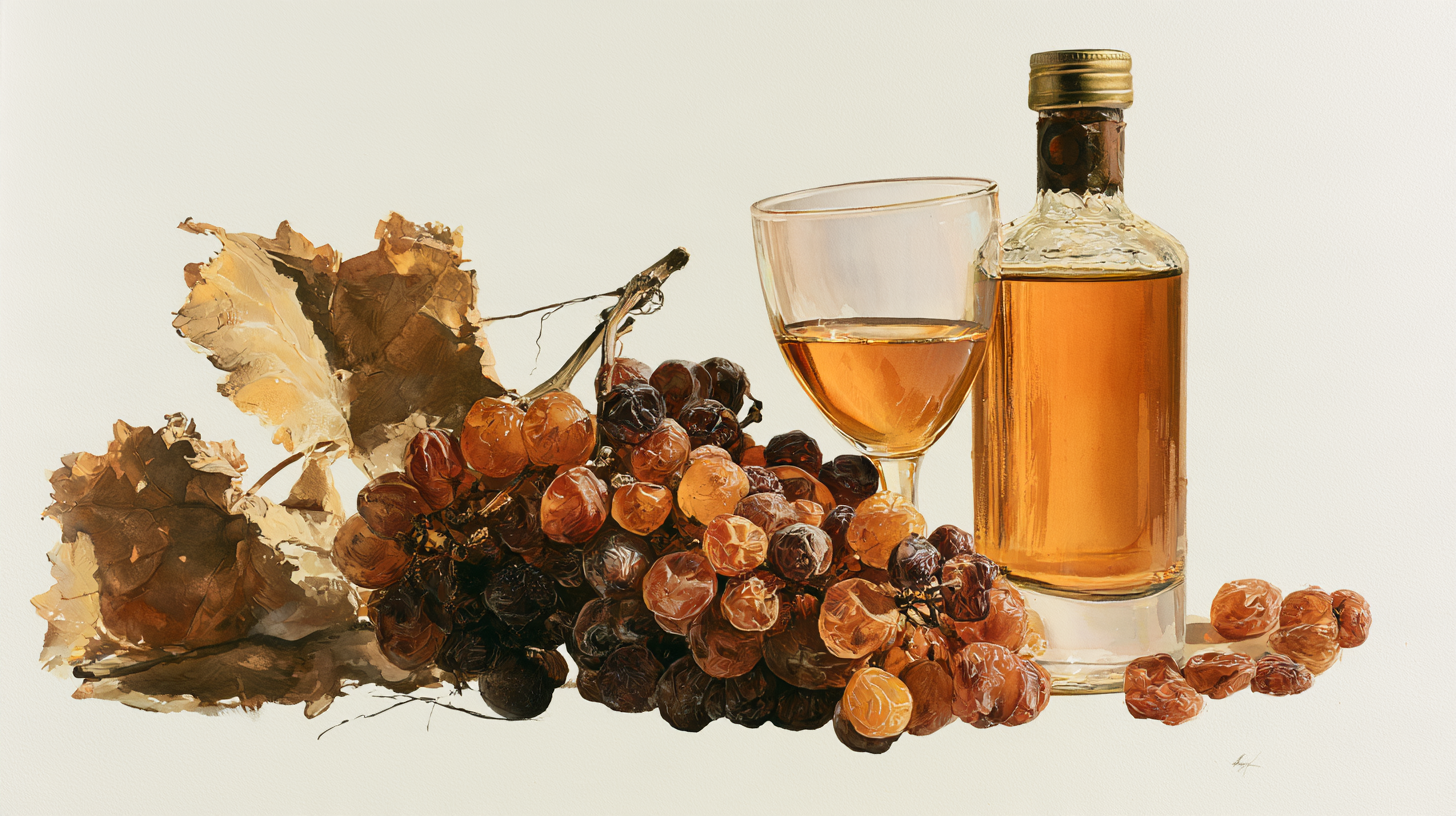
Most people arrive in Santorini expecting white wine.
Crisp Assyrtiko.
Minerality.
Salt, citrus, volcanic soil.
And yes — that is absolutely part of the island.
But Santorini also has another wine tradition.
Darker.
Sweeter.
Slower.
A tradition built around grapes left to dry under the Aegean sun until much of their water disappears and everything inside them becomes concentrated.
The result is one of Greece’s great dessert wines.
Vinsanto.
And behind it is a story much older and stranger than most visitors realize.
First, forget what “sweet wine” usually means
Vinsanto is not made by simply adding sugar.
Its sweetness begins in the vineyard.
After harvest, the grapes are spread out and left to dry under the hot Santorini sun.
Over roughly a week or more, they lose a large part of their water.
What remains becomes intensely concentrated.
Sugar.
Acidity.
Aromas.
Everything.
The grapes are then pressed and fermented very slowly.
Because the must is so rich in sugar, fermentation is difficult and often stops naturally before all of that sugar is converted into alcohol.
That is how Vinsanto becomes naturally sweet.
Not manufactured.
Concentrated.
White grapes, dark wine
This is one of the first surprises.
Vinsanto is usually made from white grapes.
Primarily Assyrtiko, with Aidani and sometimes small amounts of other local varieties.
Yet after years of ageing, the wine can become amber, copper, mahogany or even deep brown.
Assyrtiko contributes something crucial.
Acidity.
Without it, a wine this sweet could become heavy.
Instead, good Vinsanto can feel almost electric.
Sweet, yes.
But also sharp.
Fresh.
Alive.
That tension is what makes the best examples so memorable.
The sun does the first part of the work
Harvest on Santorini comes early.
The island is hot, dry and extremely windy.
Vines are traditionally trained into low basket-like shapes called kouloura, protecting the grapes from strong Aegean winds.
For Vinsanto, the harvested grapes are then laid out to dry.
Typically for around a week to ten days.
During that time, they shrivel.
Water evaporates.
Flavour becomes denser.
Pressing those grapes is difficult because there is far less juice left inside them.
That is one reason Vinsanto is expensive.
You need a lot of grapes to make a relatively small amount of wine.
Then comes patience
After fermentation, Vinsanto is usually aged for years.
Sometimes for decades.
Producers often prefer old barrels rather than strongly flavoured new oak.
Time slowly changes the wine.
Fresh fruit becomes dried fruit.
Then caramel.
Coffee.
Orange peel.
Nuts.
Spices.
Honey.
Old vintages can become extraordinary.
Some producers keep Vinsanto in barrel for 10, 20 or even 40 years.
At that point, you are not really drinking something that tastes like grapes anymore.
You are drinking time.
Why the name causes confusion
Vinsanto is sometimes confused with Italian Vin Santo.
They are not the same wine.
The name used on Santorini is traditionally associated with “Vino di Santorini” — wine of Santorini.
The island’s sweet wine became widely known abroad centuries ago.
By the late 18th century, Santorini wines were being exported in significant quantities, including to Russia.
So although the names sound similar, Santorini Vinsanto has its own history and identity.
Today it is protected under the PDO Santorini designation.
The forgotten wine: Mezzo
Vinsanto was not the only traditional sweet wine of Santorini.
There was also another style.
Mezzo.
Historically, Mezzo was a red wine that was less sweet than Vinsanto.
It largely disappeared as modern winemaking changed.
But in recent years, some producers have begun reviving the style.
That makes Mezzo one of the more interesting things to look for if you enjoy finding wines that are not on every tourist tasting list.
It represents a different side of Santorini.
Not the famous dry Assyrtiko.
Not the rich amber Vinsanto.
Something in between.
A reminder that the island’s wine history was once much more diverse than the bottles most visitors see today.
Why sweetness works so well here
Santorini seems like a strange place for sweet wine.
It is dry.
Windy.
Almost brutally sunny.
The soil is volcanic and poor.
Rainfall is low.
But that harshness is exactly what creates concentration.
The vines struggle.
Yields are small.
The grapes develop intensity.
And Assyrtiko retains unusually strong acidity even in a hot climate.
That combination is perfect for Vinsanto.
High sugar.
High acidity.
High concentration.
Without that balance, the wine would feel syrupy.
With it, Vinsanto can remain fresh even after many years in barrel.
What does Vinsanto actually taste like?
That depends heavily on age.
Younger versions often show:
raisins, dried apricot, honey, orange peel and sweet spices.
Older wines can move toward:
coffee, caramel, nuts, quince, dried figs and tobacco-like complexity.
The colour deepens with age.
So does the texture.
But the acidity remains the backbone.
That is why a small glass can last a long time.
This is not a wine you drink quickly.
It is a wine you sit with.
What should you eat with it?
The obvious answer is dessert.
Dried fruit.
Caramel.
Chocolate.
Nuts.
Fig-based desserts.
All work well.
But one of the best pairings is often something salty.
Strong blue cheese.
Sharp aged cheese.
The salt and fat contrast beautifully with Vinsanto’s sweetness and acidity.
And very old Vinsanto is often best without food at all.
Just a small glass.
Nothing else.
Where to taste it in Santorini
Most serious wineries on Santorini will offer at least one sweet wine.
But do not simply ask:
“Do you have Vinsanto?”
Ask:
How old is it?
How long was it aged?
Which grapes were used?
Is there an older vintage available?
Those questions often lead to a much more interesting tasting.
If the winery has several ages of Vinsanto, try them side by side.
That is where the wine becomes fascinating.
You can literally taste time moving through the glass.
One thing tourists often miss
Santorini’s wine culture is not just another activity between Oia and the beach.
The vineyard itself is part of the island’s history.
The low basket-shaped vines.
The volcanic soil.
The extreme wind.
The tiny yields.
The sun-drying of grapes.
The slow ageing.
All of it belongs to the same landscape.
That is why wine tasting on Santorini makes much more sense when you understand how unusual the island is.
Dan’s note
If you visit Santorini, try at least one dry Assyrtiko.
But do not stop there.
Ask for Vinsanto.
And if someone offers you an older vintage, take your time with it.
This is one of those wines that makes much more sense after you know where it comes from.
The sun.
The wind.
The volcanic soil.
The patience.
All of Santorini is somehow inside that small glass.
Plan your trip
Top Santorini Wine Tasting Tours ↗
Some links are affiliate links. I may earn a commission at no extra cost to you.
Enjoyed this little corner of Greece? You can buy me a coffee.